
This opinion is a useful guide for trial lawyers litigating responsible third party (RTP) designations under Chapter 33. Judge Whitehill draws an important distinction between liability and responsibility, clarifies the meaning of “harm” in § 33.011(6), and explains what a motion must plead to satisfy Texas’s notice-pleading standard.
In short, a responsible third party need only contribute to any single harm among multiple alleged harms pled by the claimant.
The court rejected the argument that a responsible third party must have participated in the sued-for breach itself. Instead, Judge Whitehill determined that “harm” in § 33.011(6) “has a meaning more akin to the legal concept of ‘injury’ than the concept of ‘breach.’”
The opinion also explains that while the current statute still requires the designated third party to have “caused or contributed to the harm via some ‘conduct or activity that violates an applicable legal standard,’” “it is no longer the case that they must be liable to the plaintiff for the damages claimed.”
Responsible Third Party Standard vs. Party Defendant Standard
Pre-2003 law required that a responsible third party be someone who “may be liable to the plaintiff for all or a part of the damages claimed.” The 2003 amendment eliminated that requirement.
Under the current statute, the inquiry is narrower and more mechanical: Did the proposed third party cause or contribute in any way to the harm for which recovery of damages is sought?
As the court summarized: “The standard is contribution to the harm; breach of the same duty is not required.”
What Is the Relevant “Harm”?
The parties disputed whether the relevant harm was Truist’s alleged breach of fiduciary and trustee duties, or the broader “irretrievable deterioration of the trust estate.”
Judge Whitehill concluded that Chapter 33 uses “harm” in a manner closer to injury than breach, and that multiple harms may be pled in a single action. Nothing in Chapter 33 requires that the designated person caused or contributed to every harm asserted.
If the individual contributed to at least one pled harm, designation is permitted.
What the Motion Must Plead
Chapter 33.004(g) incorporates Texas’s notice-pleading standard. A court must grant leave unless the objecting party establishes that the movant failed to plead sufficient facts concerning the alleged responsibility of the person.
The motion must do more than name actors. It must connect the alleged acts to the alleged harms.
Here, the court concluded Truist’s motion sufficiently linked Senior Care’s and Bouldin’s alleged failures (including nonpayment, tax defaults, and diversion of funds) to Preston Hollow’s alleged injury—including the deterioration of the trust estate and claims that Truist failed to monitor or prevent those actions.
Taking Truist’s allegations as true, the court held that the proposed designees plausibly “caused or contributed to causing in any way the harm for which recovery of damages is sought.”
Responsible Third Party Pleading Guide for Texas Trial Lawyers
For defendants seeking designation:
- Identify a specific alleged injury.
- Allege concrete acts by the proposed third party.
- Connect those acts to at least one pleaded harm.
For plaintiffs opposing designation:
- Focus on whether the motion fails to link alleged conduct to a specific injury.
- Arguments that the third party owed no fiduciary duty or cannot be held liable for damages will not defeat designation if contribution to injury is adequately pled.
Conclusion
Preston Hollow reinforces that responsible third party designation turns on contribution to injury—not ultimate liability. A third party need not be liable for the damages claimed. The motion must connect alleged acts to alleged harms. And contribution to a single pleaded harm is sufficient to place the person on the verdict form.
The opinions expressed are those of the authors and do not necessarily reflect the views of the firm, its clients, or any of its or their respective affiliates. This article is for informational purposes only and does not constitute legal advice. For more information, please contact Chris Bankler or a member of the Trial & Appellate Litigation practice.
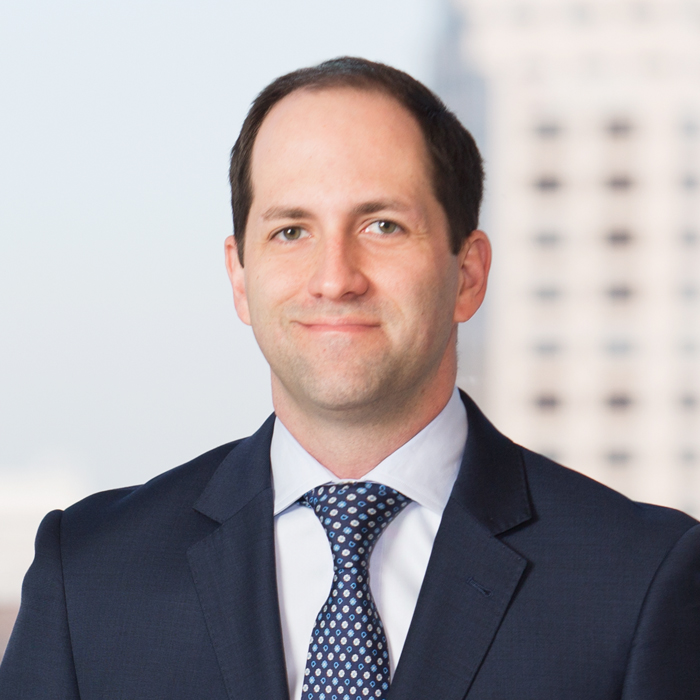 Meet Chris
Chris Bankler focuses on the resolution of disputes for businesses and financial institutions. He counsels clients through the process of complex business litigation, including general business disputes, fraud claims, breach of fiduciary duty cases, and complex business bankruptcy litigation. He has served as litigation counsel in more than 100 cases in state and federal courts, as well as FINRA and AAA arbitrations.